I don't know what to do with the work that I need to accomplish.And I don't know why but there is something telling me to update this blog. And now without further ado, here are the applications of Gestalt theory to the teaching and learning process.
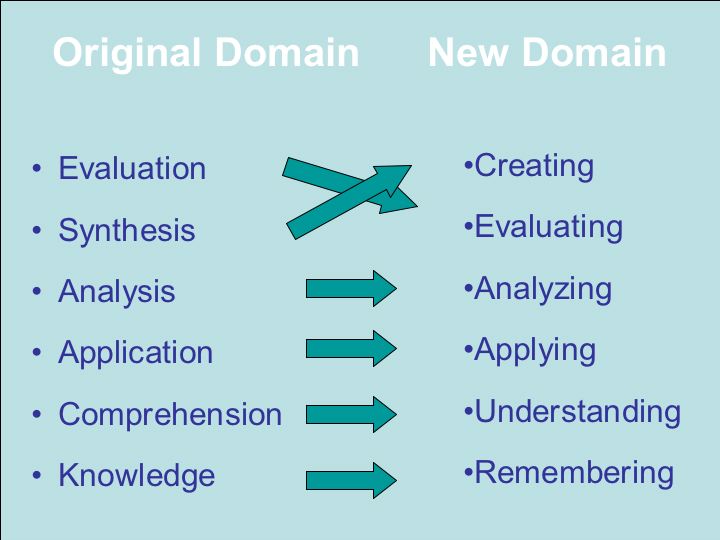
1. Make your lesson holistic. The word Gestalt itself is almost synonymous to the word "whole". And for this, Gestalt psychology proposes education to be an integration of affective and cognitive domains of learning. As teachers, we can actually do this by setting the objectives that does not only focus on the cognitive (and psychomotor) domains of teaching and learning but also on the affective domain as well.
2. In relation to above application, the fulfillment of the cognitive-affective integration is not only limited to instruction rather also related to the experiences of the students inside the classroom. This can be done when teachers maintain an emotionally harmonious and non threatening atmosphere during the teaching and learning process which consequently caters exchange of ideas and learning. Teacher behavior is a critical factor, and if necessary, should be changed in order to maintain good relationship between the teacher and his/her students, and relationship among and between students. This can be realized through teacher development programs, trainings or seminars.
3. Gestalt psychology is a proponent of discovery or insight learning. This takes place when learners forms relationships of the elements around them then integrates and organizes these elements to form insight (Remember Sultan?). Hence, teachers must make use of discovery approach in learning. Teachers can use experiments, laboratory and inquiry-based strategies.
How About the Gestalt Principles?
These are implications of the Gestalt principles in the teaching and learning process. Now you know that Gestalt principles are not just mere principles of visual drawings or illustrations.
1. Law of Proximity
Related concepts or lessons should be taught aligned or closely to each other. This is the reason why subtraction is taught after addition, multiplication after subtraction then division after multiplication. Imagine teaching addition then jumping directly to polygons.
2. Law of Similarity
Similar lessons or contents should be grouped together to make learners develop understanding more efficiently and effectively. This is the reason why lessons are grouped into units: Unit I is for human body, Unit II is for energy and motion, so on and so forth.
3. Law of Closure
When a concept or topic is incomplete thus isn't "closed", incomplete information may make learners want to discover what’s missing, rather than concentrating on the given instruction. If students find a math algorithm confusing because a certain question is left unanswered or a step isn't clear, they will tend to concentrate on that confused part of the process rather than the total process as a whole. This is why students get "lost". Thus, make the lesson complete. Present it clearly, simply and always be ready for students' clarifications.
4. Law of Good Continuation
Lessons should be presented in such a way that learners will see these as connected and continuous. Now you know why we have the "Review" part of the lesson plan. This way, students will realize that their new lesson actually has continuity and is related to what they already know or to the previous lesson.
5. Law of Pragnanz
Pragnanz states that when things are grasped as wholes, the minimal amount of energy is exerted in thinking. In short, make your lesson holistic, complete and most of all simple.
6. Law of Figure/Ground
For a figure to be perceived, it must stand out from the background. Emphasis should be done on important aspects of the lesson. For example, teachers should vary the tone of their voice or write boldly or underline the important key words of the lesson.
Furthermore, aside from what I have discussed above, Gestalt principles are also very useful in preparing and presenting instructional materials. I will not discuss these further because I think these are easy enough for you to think of.
As I always say, these are just some of the applications. Again and again, there are a lot of ways in which you can imply Gestalt psychology in the teaching and learning process. I hope that you yourself could reflect on these.